Before it goes on the lot
What a vehicle history report can tell you, and what it cannot
A report is evidence about a car. It is not the whole of what is true about it.
What a report actually shows
A vehicle history report is built from what other people reported, not from what happened to the car. Where it is complete, it shows recorded accidents, any branded title, the odometer reading at each point it was recorded, how many owners the car has had, and roughly where it has lived. That is real information, and it is evidence rather than proof.
“Evidence” is the right word because a report is only as complete as the records that fed it, and those come from a mix of state title offices and the insurance industry, which do not all report on the same schedule or into the same system. A car that has lived in more than one state can carry a thinner record for reasons that have nothing to do with the car.
- Title brand checked — salvage, rebuilt, flood, lemon-law buyback
- Vehicle history report pulled and read, not just filed
- Odometer reading against every recorded reading in that report
- Open recalls looked up by VIN and, where there is one, carried out before sale
What it cannot show
A clean title means an insurer never wrote the car off. It does not mean the car was never hit. A repair paid for privately, with no claim ever filed, leaves no mark on any report anywhere — and that is common. It is usually somebody choosing to pay a bodyshop directly rather than involve an insurer at all, not somebody hiding anything.
The same gap applies to a car that has never crossed an insurer's desk at all, because it was owned outright and driven lightly. No claim was ever filed because no claim was ever needed, and a report on a car like that can read as clean simply because nothing happened to it, rather than because anything was checked.
What we measure instead
A paint depth gauge and twenty minutes finds what a report cannot. Every panel on every car here is measured, and the readings go on the folder, including where a panel has been resprayed and which one it is.
- Paint depth measured on every panel and recorded on the folder
- Panel gaps compared side to side
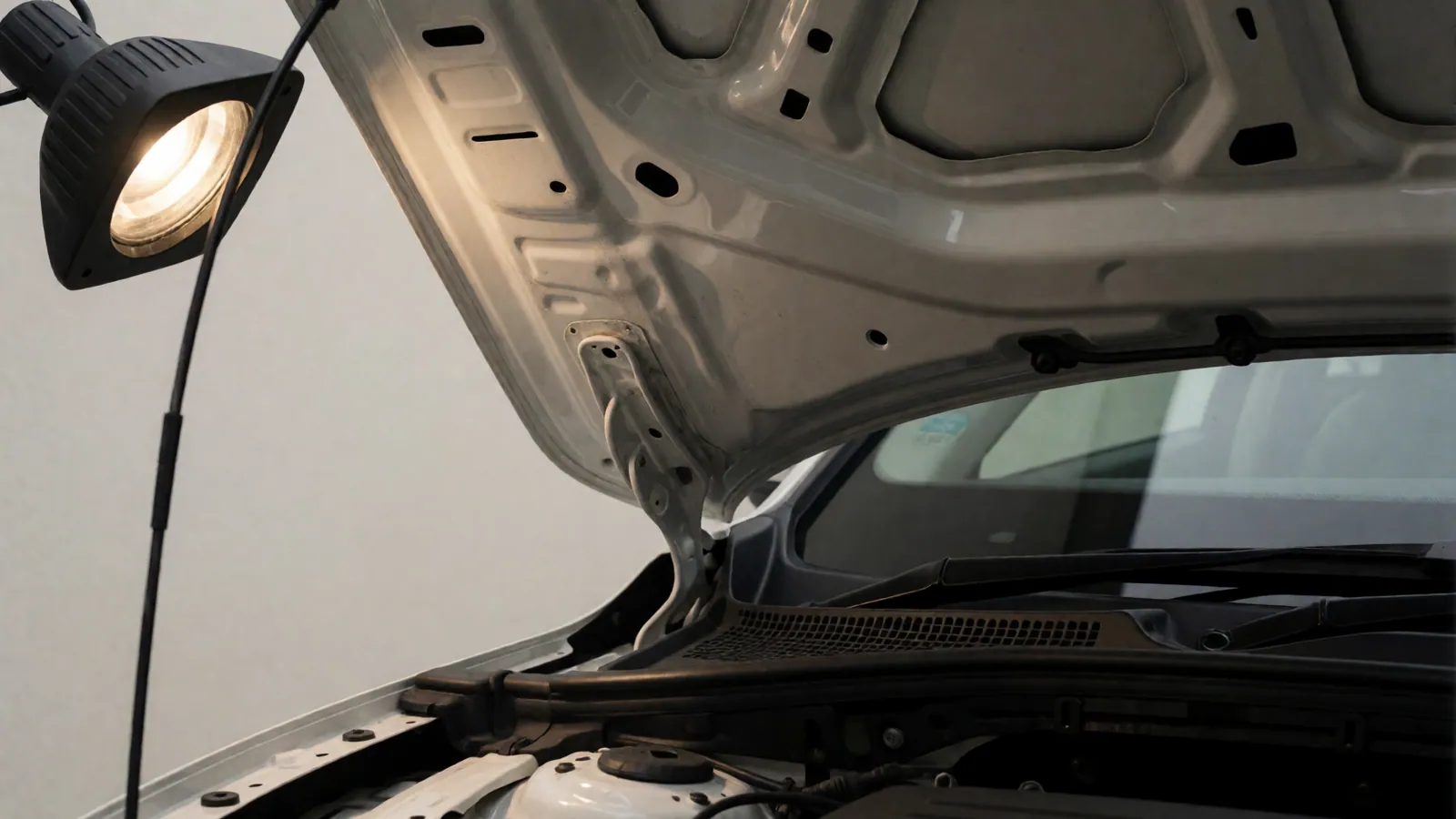
- Overspray in the door shuts, the boot channel and the engine bay
- Underseal and arch liners for hiding rather than protecting
Have a look at what is on the lot
Every car in stock, with its price, its mileage and the warranty band that mileage puts it in. Filter it down to what you can actually spend, and book 45 minutes with the one you want to drive.