Opening hours 000-000-0000
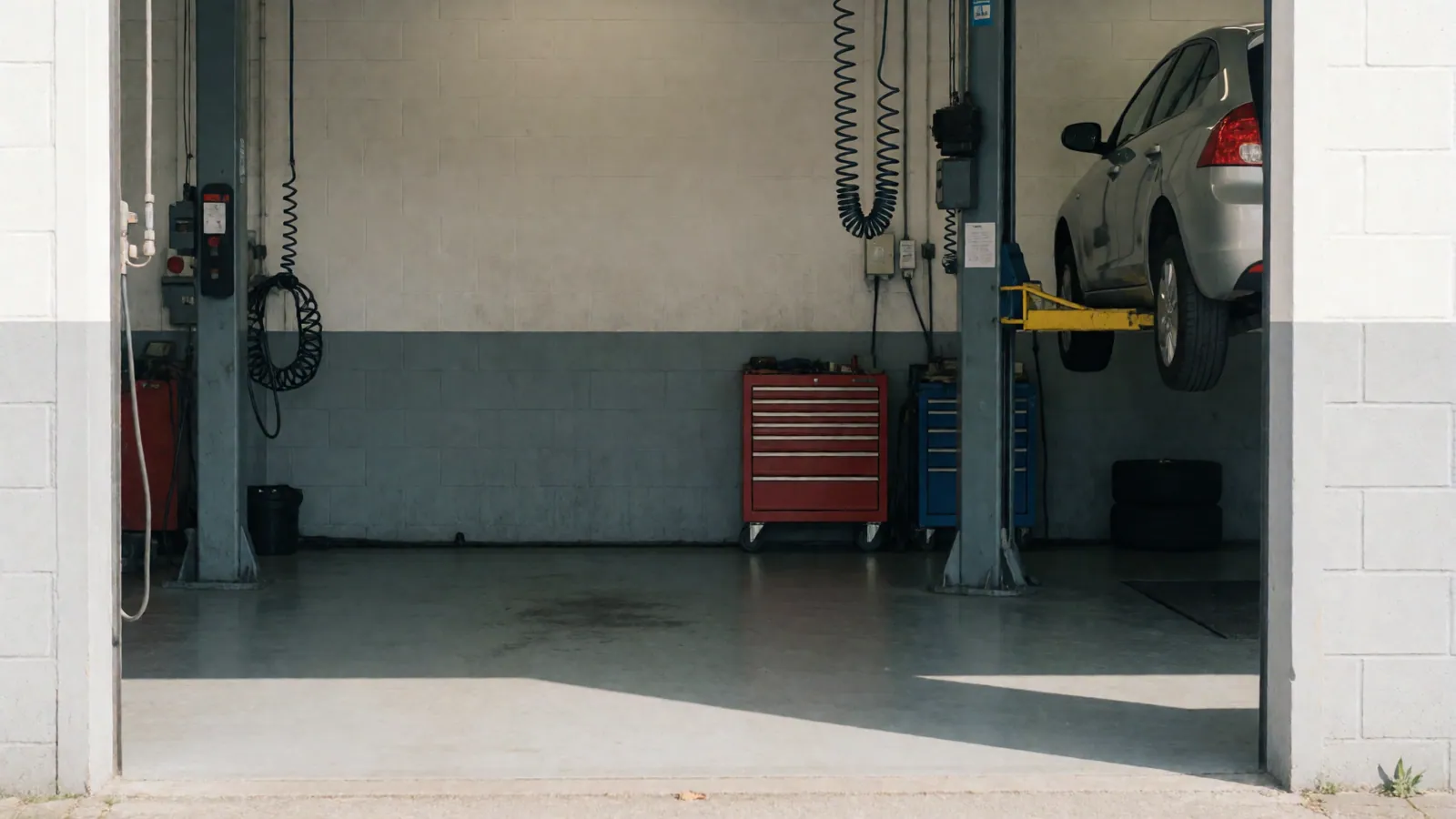
A clean workshop with two service bays, one empty and one with a car up on a lift

Before it goes on the lot

Every point in our inspection, published in full

A number counted from a published list, not a number chosen to sound thorough.

80 points, grouped the way the work is done

A lot advertising a "150-point inspection" is making a claim it cannot back up in writing, because nobody selling a car that way can hand you the list. This one can. Every point below is something somebody actually does to a car before it goes on the lot, and the number is whatever the list adds up to: 80.

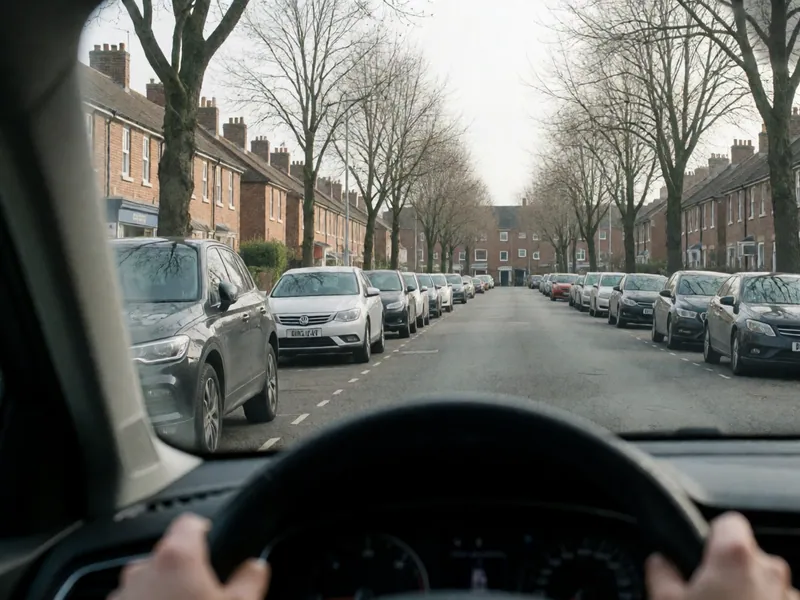
The view forward through a windscreen on a quiet residential street, hands on the lower rim of the steering wheel

The road test, first

It goes first because half of what is wrong with a used car announces itself in four miles and nothing on a ramp will tell you about it. The route is the same every time — Northern Boulevard, the BQE on-ramp, and the potholed bit of 58th Street nobody fixes — because a route you know is a control.

  1. Cold start, listened to from outside the car
  2. Idle quality for the first ninety seconds, before anything warms up
  3. Clutch or torque-converter take-up from rest
  4. Every forward gear under light and under heavy throttle
  5. Kickdown, and the shift back up
  6. Steering straight-ahead feel and any pull, hands off on a level road
  7. Brake pedal travel and any pulsing under a firm stop from 40
  8. Handbrake on the 58th Street ramp
  9. Suspension over the worst hundred yards on the route
  10. Wind and road noise at highway speed, both windows up
  11. Air conditioning down to temperature, and the heater up to it
  12. Warning lights at the end of the drive, not the beginning
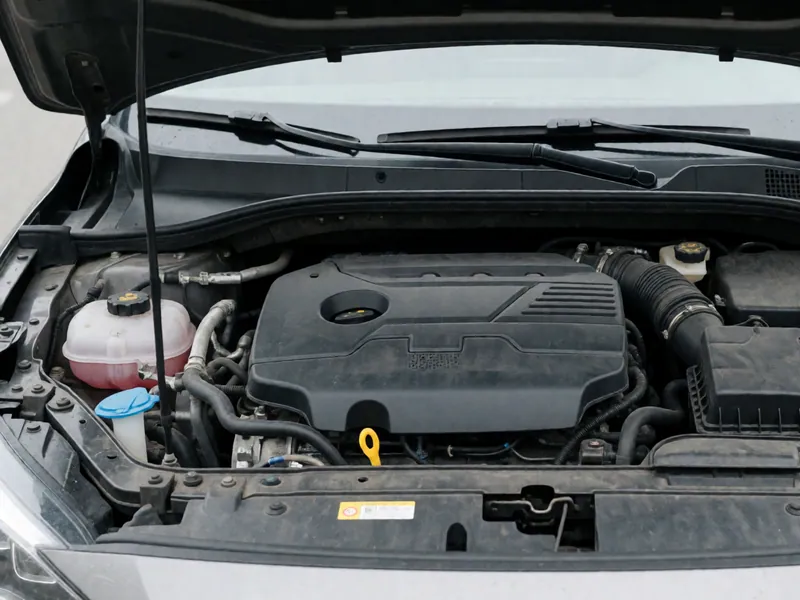
A clean engine bay from above with the bonnet open, a plain black plastic engine cover, hoses and the strut towers

Under the bonnet

The engine bay is where a car's history is written, and most of it is written in the places nobody photographs: the underside of the oil cap, the colour of the coolant, whether a hose clamp has been moved.

  1. Oil level, colour and what is on the underside of the filler cap
  2. Coolant level, colour, and the header tank for oil in it
  3. Brake fluid level and moisture content, measured
  4. Transmission fluid where the car has a dipstick for it
  5. Power steering fluid and the reservoir for aeration
  6. Battery voltage, and a load test rather than a voltage reading
  7. Charging voltage at idle and at 2,000 rpm
  8. Auxiliary belt for cracking, glazing and correct tension
  9. Every hose squeezed, top and bottom
  10. Air filter, cabin filter and the housings they sit in
  11. Radiator fan cutting in, twice
  12. Compression across every cylinder where anything on the road test suggested it
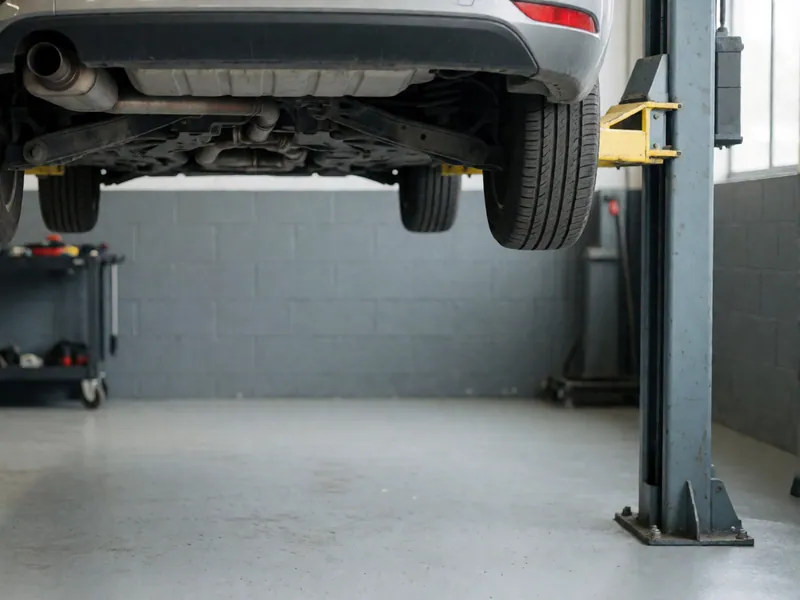
A car raised on a two-post lift in a clean workshop, seen from below and behind, the exhaust and suspension arms in view

Underneath, on a lift

Twenty minutes with the car in the air is the cheapest twenty minutes in this business, and it is the part a private seller cannot show you in a car park.

  1. Every oil seal: crankshaft, cam, gearbox, driveshaft, differential
  2. Sump, gearbox and axle casings for weeping as against leaking
  3. Exhaust from the manifold back, including every hanger
  4. Catalytic converter shield present and the converter itself in place
  5. Subframe mounts and the bolts for having been moved
  6. Suspension bushes, one by one, with a bar
  7. Ball joints and track rod ends for play
  8. Anti-roll bar links and drop links
  9. CV boots, inner and outer, both sides
  10. Wheel bearings, spun by hand and listened to
  11. Underbody corrosion, and specifically the sills and the rear spring seats
  12. Fuel and brake lines along their whole run
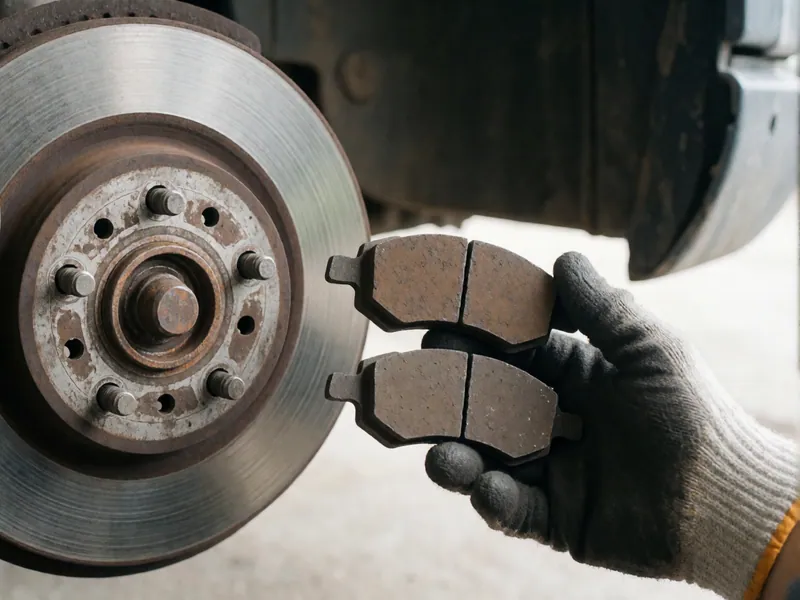
A brake disc and calliper with the wheel off, a gloved hand holding a new brake pad beside a worn one

Brakes, tyres and wheels

These are the three things a buyer can check in the first fortnight, so they are the three things there is no point being vague about. Everything below is measured, written down and on the folder you are handed.

  1. Front and rear pad material measured in millimetres, not eyeballed
  2. Disc thickness measured against the manufacturer's minimum
  3. Disc surface for lipping, scoring and heat marking
  4. Calipers and slide pins freed and greased
  5. Flexible hoses for perishing and for bulging under pressure
  6. All four tyres measured across three points of the tread
  7. Tyre age from the date code, because tread is not the only thing that expires
  8. All four the same make and pattern across an axle, or they are changed
  9. Spare, jack and wheel brace present, and the spare inflated
  10. Wheels for kerb damage, buckles and corroded seating faces
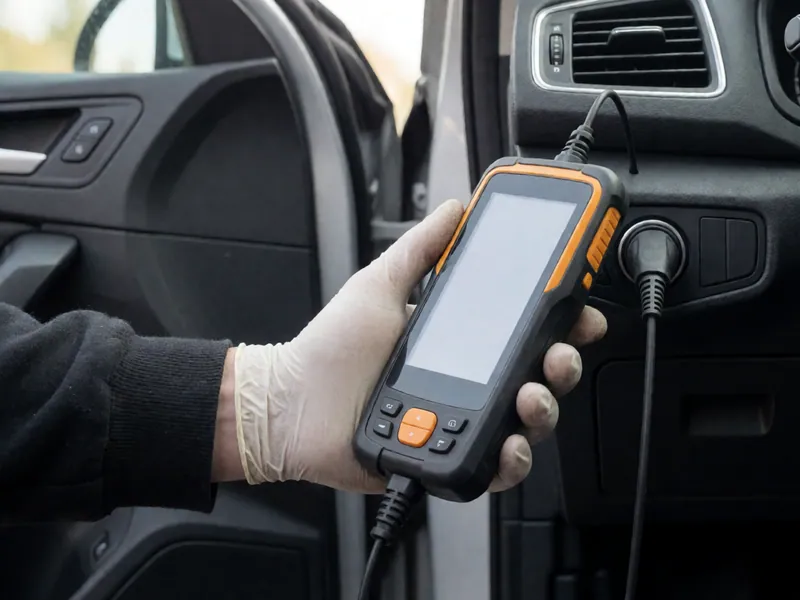
A gloved hand holding a handheld diagnostic tool plugged into a socket in the driver's footwell, its screen blank and switched off

Electrics and systems

A fault code names a circuit, not a part. The scan tells us where to look; it is not the diagnosis, and a lot that reads you a code list as though it were one is not telling you anything.

  1. Full scan of every module, and stored codes read rather than cleared
  2. Readiness monitors, so nothing has been cleared the day before
  3. Every exterior lamp, including both reversing lights and the plate lamps
  4. Every window, mirror, central locking point and both key fobs
  5. Wipers, washers and the rear wash-wipe where fitted
  6. Air conditioning vent temperature measured, and the compressor clutch engaging
  7. Heated seats, heated screens and the rear demister element
  8. Horn, and every switch on both stalks
  9. Reversing camera and every parking sensor where fitted
  10. Airbag warning lamp behaviour on ignition, which is not the same as it being off
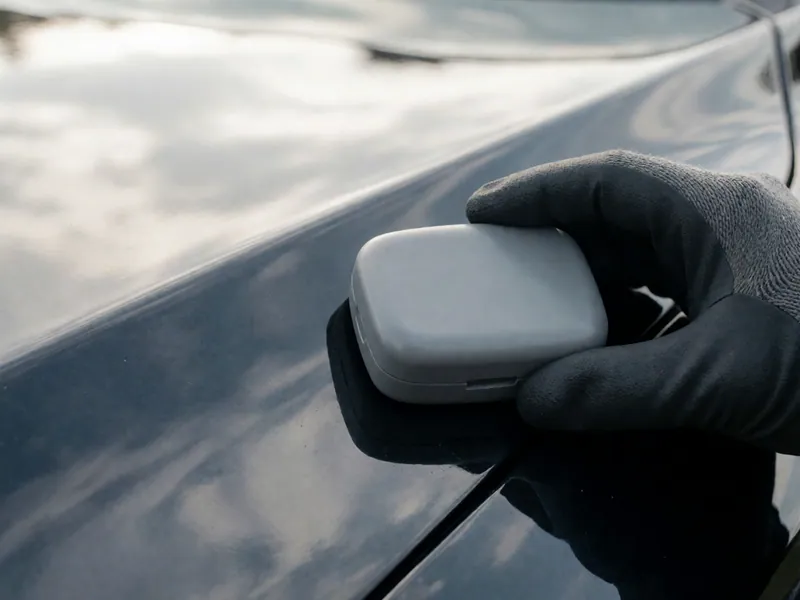
A paint depth gauge held flat against the dark paint of a car's front wing, its display blank

Body, paint and glass

We measure paint depth on every panel and write down what we find, including where it has been repainted. A repaired car is not a bad car. A repaired car sold as an unrepaired one is a bad sale.

  1. Paint depth measured on every panel and recorded on the folder
  2. Panel gaps compared side to side
  3. Overspray in the door shuts, the boot channel and the engine bay
  4. Seam sealer and spot welds for having been disturbed
  5. Every glass panel for chips and for the correct etching
  6. Windscreen for a chip in the wiper sweep, which is a replacement and not a repair
  7. Underseal and arch liners for hiding rather than protecting
  8. Bumper mounts, which are where a light knock shows up after the paint does not
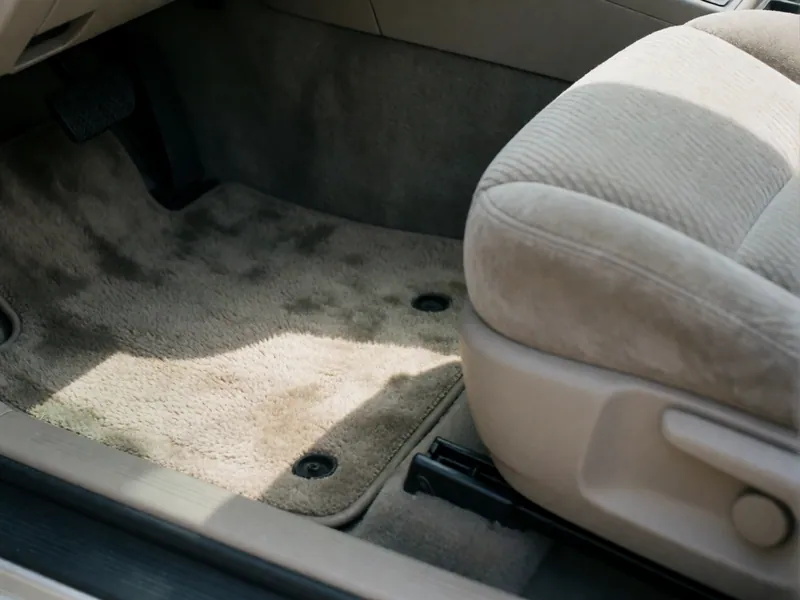
A freshly vacuumed car footwell and cloth seat base, the carpet nap brushed in one direction

Inside

The interior is the part you sit in for three years, and it is the part a quick valet is designed to hide. We take the mats out and look under them.

  1. Carpet lifted in all four footwells, looking for damp
  2. Boot floor and spare well lifted, same reason
  3. Seat runners, tilt and every recline mechanism
  4. Seat belts pulled to full length and allowed to retract, all of them
  5. Every trim panel for rattles, with the radio off
  6. Headlining for sag and for water marks at the corners
  7. Every warning lamp on the ignition cycle, and the ones that should go out
  8. Odometer reading against the service history and against the wear on the pedals
  9. Sunroof, where fitted, opened and its drains flushed
  10. Smell, which is not a joke: damp and smoke are both worth money
An open plain manila folder on a wooden desk holding a stack of blank white sheets with a pen laid across them

Paperwork and history

This is the half of an inspection nobody photographs. It is also where the expensive surprises live, because a car with a clean bodyshell and a branded title is worth a fraction of a car with a straight one.

  1. Title in hand and in the seller's name before we buy the car at all
  2. Title brand checked — salvage, rebuilt, flood, lemon-law buyback
  3. Vehicle history report pulled and read, not just filed
  4. Odometer reading against every recorded reading in that report
  5. Open recalls looked up by VIN and, where there is one, carried out before sale
  6. Service records assembled into one folder and any gap written on the front of it

What this tells you, and what it does not

Everything above is a measurement of this car as it is today, made once, in this order, on every car that comes onto the lot. Ask any lot advertising a number for its own list, in writing. Most cannot produce one, because the number was chosen to sound thorough rather than counted from anything.

Why an inspection cannot predict next March

Have a look at what is on the lot

Every car in stock, with its price, its mileage and the warranty band that mileage puts it in. Filter it down to what you can actually spend, and book 45 minutes with the one you want to drive.